
Gifts7 min read
Is a domestic product a good choice when you want something other than the usual gift?
A gift makes sense only when it shows you thought of the person, and a shelf of the same perfumes, chocolates and mugs rarely does.

A gift makes sense only when it shows you thought of the person you give it to, and a shelf full of the same perfumes, boxes of chocolates and mugs rarely manages that. Domestic products, from honey and slatko to handicrafts, offer a different way, but they are not the answer for every occasion and every person. So first decide what the gift should say, and only then choose between ordinary shopping and a small domestic producer.
Why classic gifts do not suit every occasion
A classic gift has one big advantage: it is safe and known in advance. When you do not know the person well enough or your time is short, a solution from a shop seems a reasonable choice. The problem starts when the same gift turns up for a birthday, for New Year and every time you visit someone. Then it loses what gives a gift weight: the feeling that it was chosen for that very person.
Imagine a colleague who is retiring. Another bath set will end up in a drawer or be passed on, while a jar of honey from a beekeeper in his part of the country can start a conversation. The same goes for hosts who invite you to a slava: an expensive box of chocolates is polite, but rarely memorable.
Shopping in places such as the BIG FASHION Kragujevac shopping centre and similar centres works very well when you know exactly what you are looking for. They offer a large choice in one place, so going there is practical when you need clothing, electronics or something for the home that the recipient has asked for.
In such cases a classic gift is not the weaker choice; it simply fits the intention better. The difference shows only when a gift has to say something about a relationship, not just fulfil an obligation.
So the first step is to ask what the gift is for. If it has to meet a concrete need, ordinary shopping often wins. If it has to express attention, a memory or gratitude, it is worth looking wider.
What gives a domestic product a personal touch?
A domestic product rarely comes from an anonymous series. A jar of plum slatko, a jar of honey or a hand-knitted sock carry the trace of a particular place, season and person. When you give something like that, you give not just an object but a small story the recipient can retell: where it was made, how it is made, why it tastes the way it does.
Products you discover while travelling can be especially valuable, because they later remind you of the place you visited. If you are planning a holiday and searching for accommodation in Sokobanja, you can look up the local producers of honey, homemade jams or crafts in advance. Then you bring back a gift that was not bought on the way, but carefully chosen and tied to the place it comes from.
Honey is a good example. Meadow, acacia or sage honey differ in colour, scent and thickness, so the gift is easy to fit to someone’s taste. Strawberry or quince slatko reminds many people of their grandmother’s house, an emotion an industrial product can hardly create.
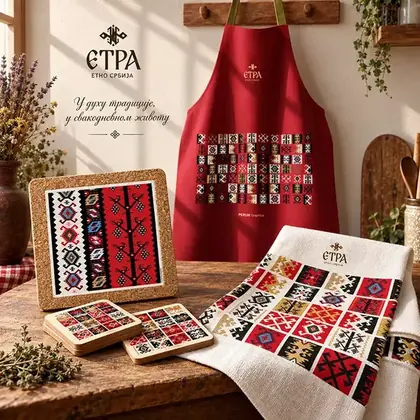
Handicrafts, such as wool slippers, wooden chopping boards or embroidered napkins, have another kind of value: they are used for years and remind the owner every day of who gave them.
Still, domestic does not automatically mean better. The touch of a gift depends on the quality of the work and on how well it suits the recipient. Slatko for someone who must avoid sugar, or a handicraft that does not fit the interior, will not delight even with the loveliest story. So before buying, check that the declaration is legible, what the shelf life is and how the gift is packed, because the packaging is not a side issue.
In practice the difference in personal touch is often in the detail. A jar with a handwritten label, a box with three kinds of honey or a small set of zimnica in a wooden basket look thoughtful, though they cost little more than a standard gift.
How to match the gift to the recipient’s taste
The most common mistake in choosing a gift is thinking about yourself instead of the other person. What seems original to you may be impractical or uninteresting to the recipient. So before deciding, it helps to go through a few simple questions about the person.
You can consider these:
- Do they like to cook and try new flavours, or do they eat very simply?
- Do they live in a flat with little space, or have a home they love to decorate?
- Do they value tradition, or prefer modern, minimalist things?
- Do they have any dietary restrictions, allergies or health habits?
The answers quickly narrow the choice. A lover of teas and a healthy lifestyle will enjoy a box with honey, propolis and herbal teas. Someone who likes to cook would enjoy domestic oils, ajvar or spices. Someone who values objects with soul will enjoy handmade ceramics or textiles.
Visiting someone is a separate question. If you are invited to dinner, consider whether it is more fitting to bring something to share, such as a cake, slatko or a pie, or an object that stays in the house. What is served naturally becomes part of the evening and is enjoyed in conversation, while an object stays as a longer-lasting reminder. Neither is better in itself, but they do not leave the same impression.
The same goes for the occasion. For a new baby or moving into a new home, a symbolic and practical gift is more fitting, for example bread and salt, honey or a handmade object for the home. For an adult’s birthday there is more room for surprise, such as a box of selected domestic delicacies.
When a domestic product fits the gift you have in mind
In essence, a domestic product is not the answer to every question, but it is an excellent answer to one in particular: how to give something that looks thoughtful rather than pre-packed. To make the decision easier, compare both ways by the intention of the gift, not only by where you will buy it.
Ordinary shopping makes sense when the recipient knows exactly what they want, when you need a quick and reliable option, or when the gift must be a particular size, brand or function. A domestic gift makes sense when the story matters to you, when it is about tradition, gratitude or a shared memory, and when you want something a little different from what the recipient already has.
Sometimes the best solutions are combinations. You can take something practical from a shop and add a small domestic detail: a jar of honey with an elegant scarf, or a box of slatko with a book. Such a pairing feels attentive rather than excessive, and lets you balance the safe and the unusual.
There is also the opposite perspective worth keeping in mind. A domestic gift carries some risk, because taste in food and handicrafts is personal and harder to hit than with a general gift. So if you do not know the recipient well enough, choose something more universal, such as meadow honey or wild berry slatko, rather than an unusual experimental product. A classic gift is not the enemy of the domestic one, but its ally when information about the person is missing.
In the end, a domestic product is the best choice when it is chosen by people who like to know where things come from. If your choice came from thinking about the person rather than from hurry, it is very likely the gift will be understood the way you meant it. And when the recipient tells you the jar of honey arrived just in time for tea, you will know the gift hit the mark.
More from the blog
Gifts6 min read
Practical gifts of domestic production: ideas for different occasions
Practical gifts of domestic production are often the best choice when you want something useful, lovely and personal enough.

Gifts4 min read
A gift for 8 March: ideas that are remembered (and eaten)
Flowers wilt, chocolates are gone in an evening and perfume is a gamble. What if a gift could have a taste, a scent, a tradition and a story?

Gifts2 min read
An original Valentine’s gift for your girlfriend
The right gift is not the most expensive one, but the one that shows you know her: her habits, fears, dreams and small rituals.
Everything in this article comes from domestic producers
Browse the shop by category, or see the producers behind the products.