
Tradition5 min read
Domestic crafts today: how traditional skills find new uses
Domestic crafts today are not just a return to old skills but an answer to the wish for practical, lasting and personal things.
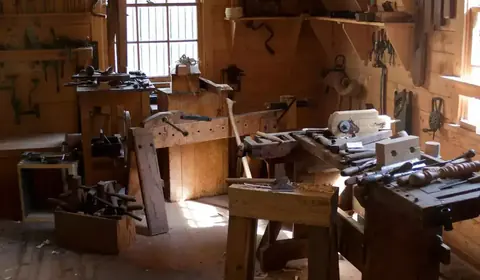
What a grandmother did out of necessity, her granddaughter now does out of a wish to make something of her own and authentic, and that change of motive has simply moved the craft to a different place in everyday life.
When the talk turns to concrete projects, the natural question is how the old knowledge combines with the modern materials and tools that make the work easier today.
Why is craft getting attention again?
Interest in handicrafts and traditional skills has grown noticeably in recent years, and not only among older people, for whom such skills have long been part of daily life, but more and more among the young.
Young people increasingly look for a way to slow down, to work with their hands and to see a concrete result of their effort. Tiredness from constant screens, and the feeling of a day spent with nothing tangible at its end, give physical work a new appeal.
There is also a practical reason. Quality domestic products, whether a woven basket, a wooden bench or handmade jewellery, often last longer than mass-produced alternatives. Buyers recognise this and turn more and more to local producers and small workshops that keep the old techniques alive while adapting them to today’s needs.
Picture a man who worked in a factory for decades and now makes wooden chairs in his garage to a design he inherited from his grandfather. He does not do it out of nostalgia, but because he has found that the work gives him a peace no office job ever could. There are more and more such stories, and they are slowly changing the picture of what it means to “take up a craft” in the twenty-first century.
From a home hobby to a useful product
A small home workshop often starts quite simply, with one project that solves a concrete everyday need. Someone builds a bookshelf because the shops do not have the right size; someone else sews cushion covers to fit an oddly shaped window. From that need the skill develops step by step, and the hobby slowly grows into something more serious.
What separates a successful project from a frustrating attempt is often not skill alone, but the choice of the right tools and the right screws and fasteners for assembly.
In that context, quality fixings for assembly often decide between a piece that looks neat in its first week and one that stays firm and usable for years. The right screws, wall plugs and other connectors are not something people talk about with excitement, but they are the foundation of every well-made piece of furniture or decorative object.
Everyday practice shows it best:
- Bookshelves: their stability depends on the right spacing and length of the screws that carry the load.
- Garden fences: they need fixings that resist moisture and changes of temperature.
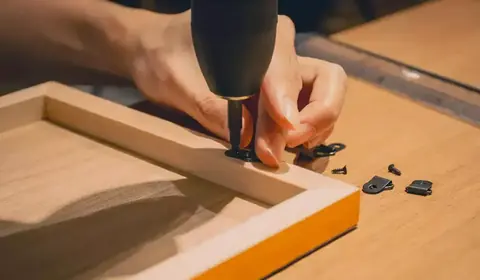
- Decorative boxes and frames: here smaller, more precise connectors are used, so as not to damage thinner wood.
Materials that change the finished look
When people talk about making wooden objects, they often mention only the kind of wood or the surface finish, and overlook the role of what joins the pieces into a whole.
Yet it is exactly this part of the process that decides whether the finished product will survive years of use or fall apart after a few months. Stability is not only a matter of looks but of safety, especially for objects that carry weight or are used every day.
The difference between an amateur and a professional impression often lies in small details: how precise the joints are, how well the screws are driven, and whether the materials suit the kind of wood. Softwood, for example, needs a different approach to assembly than hardwoods such as beech or oak, because it behaves differently under pressure.
There is also another side to the story, mentioned less often. Sometimes it is precisely the lack of perfection that gives an object an authenticity mass production cannot imitate.
A slightly visible joint, a hand-finished edge or the uneven grain of the wood are often seen as a sign that something was made with care rather than stamped out on a line. Craft objects do not have to look factory-made to be good; they only have to be functional and lasting.
What links both sides is that without the right finishing even the most beautiful design cannot last long. Wood dries, shrinks and swells with the humidity of the air, so the joints must be strong enough to take those changes. That is why serious craftsmen, whether they work professionally or for pleasure, rarely leave the choice of fixings to chance.
How does tradition enter the modern home?
Traditional skills enter the home today less through large, striking pieces and more through small details that fit a contemporary space. A hand-woven rug on the floor, a wooden chopping board in the kitchen or a picture frame made from old planks show how craft adapts to the smaller, practical needs of modern life.
This has another side that is rarely pointed out. Some believe that the mass availability of cheap, factory-made objects actually raises the value of handwork, because what is rare and carefully made becomes more desirable precisely because it is not all around us. In that sense industrial production seems, without meaning to, to have made domestic crafts look more valuable today than half a century ago.
Families who make their own furniture today, take apart old wardrobes or rework inherited pieces often find that the process matters as much as the result.
A child who helps a parent drive the last screw into a shelf they built together remembers that picture longer than a piece bought in a shop. It is in moments like these that an old skill becomes more than the making of a useful object.
So domestic crafts are not coming back as a museum exhibit, but as a living practice that adapts to everyday needs. They stay relevant not because they resist change, but because they know how to fit into it, with a little patience, the right material and hands that know what they are doing.
More from the blog
Tradition5 min read
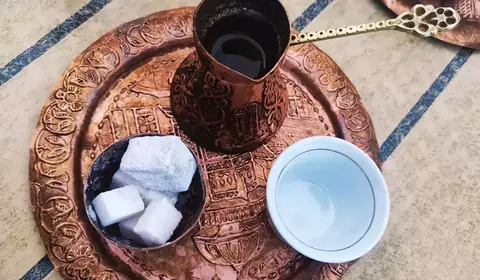
Traditional products that still have a place in the modern home
Many household products survive not out of nostalgia but because they still offer proven practical value.
Tradition5 min read
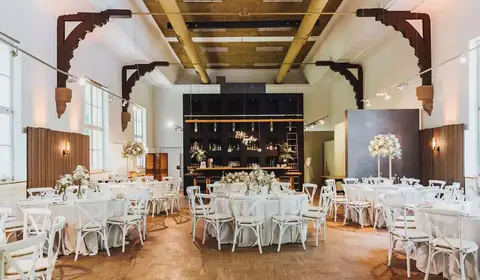
The Serbian wedding then and now: what stayed the same, and what changed completely?
A wedding has always been one of the rare moments when the whole family, of every generation and from every side, gathers in the same place on the same day.

Recipes and the table7 min read
What can you make with a jar of jam?
Jam is not just a spread for bread: it moves easily from breakfast into cakes, sauces and autumn desserts.
Everything in this article comes from domestic producers
Browse the shop by category, or see the producers behind the products.