
Small producers6 min read
What a small producer must plan before expanding the business
Growing demand can be a good sign, but it is also the moment when a small producer has to check carefully whether the business is ready to expand.
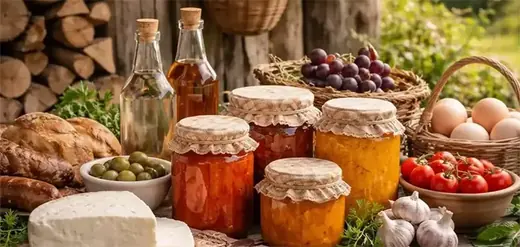
Growing demand can be a good sign, but also the moment when a small producer has to check carefully how ready the business is, because interest in domestic products in Serbia has been growing for years. Before investing in bigger production, it is worth testing whether capacity, space, purchasing and sales can bear it. Below, those parts are set out in the order in which they usually arise in practice.
Greater demand changes a small producer’s rhythm
Imagine a producer of slatko and jams who has so far sold at the market and through a few acquaintances. One season people write about them on social networks, and orders almost double from week to week. The first feeling is satisfaction, but after two or three weeks comes the first unease: the jars are not finished on time, customers wait, and the kitchen works late into the night.
Greater demand by itself does not say whether production can handle a larger volume. It is only a signal of interest, not proof that the interest is stable. A sudden jump that lasts two weeks is not the same as a buying habit that lasts for years. So it is sensible first to tell a passing wave from gradual, sustainable growth.
One practical way is to record orders, repeat customers and seasonal swings for a few months. The records need not be complicated: a notebook or a spreadsheet is enough. They show whether growth is even or depends on one event, so the decision to invest rests on facts rather than enthusiasm.
Production capacity is not only a question of equipment
When people talk about increasing capacity, the first thought is usually a bigger stove, another fridge or a new packing machine. Equipment matters, but it is only part of the picture. Capacity is the result of equipment, people, time and raw materials together, and the weakest link decides how much can really be produced.
Take a small dairy. A new vat can double the amount of milk processed, but if the cheese takes several weeks to ripen and the ripening space stays the same, the cellar will limit production. The same goes for zimnica: you can cook twice as much ajvar, but if sterilising and filling are still done by one person, the bottlenecks only move.
So it helps to break the production process into steps and estimate for each how long it takes and who does it. Only then do you see where time is really lost. You should also calculate the cost of one unit at the larger volume, because more output does not automatically mean lower costs. Sometimes extra work, packaging and energy add up so much that the margin stays the same while the work grows considerably.
Space and purchasing reveal new bottlenecks
Most small producers start in a space that was first something else: a kitchen, a garage, an outbuilding in the yard or part of a cellar. While production is modest, such a space serves well. When volume grows, limits appear that were not visible before, from storing raw materials to the movement of people and products through the workspace.
When refitting a workshop, store or shop, it is worth checking whether the existing installations can follow the planned work. The questions are very concrete. Are there enough water connections and enough pressure? Can the drain take more waste water?
Does the heating keep a stable temperature where the product dries or is stored, and do the sanitary facilities meet the requirements for more employees? Small producers often look for answers in specialised shops, and a shop for bathroom, heating and plumbing equipment can help with choosing and estimating the materials needed.
Planning the installations belongs to the same group of questions as choosing machines, and must be solved before production actually grows. Purchasing is the second big field. When volume doubles, larger quantities of raw materials are bought, which changes the negotiating position, and the risk.
A supplier who has so far delivered small packs may not keep up with a faster pace, and stock bought in advance ties up money and needs space. Before deciding to invest, it is useful to check how many suppliers are available, how long delivery takes and what the shelf life of the stored goods is.
Sales and delivery must keep up with the larger volume
A product that is ready is not yet a product that has reached the customer. When orders are rare, each can be packed by hand, the courier called and the parcel sent without much procedure. When there are thirty a day, the same routine becomes exhausting and mistakes multiply: a wrong address, a broken jar, a forgotten item.
Sales and delivery must grow at the same pace as production, or the result shows in unhappy customers. With domestic products this is especially sensitive, because the customer often buys not only an item but trust in the producer. One broken jar or a five-day delay can shake a relationship built over years.
So it is wise to think in advance about packaging that survives transport, an arrangement with a courier service, a record of orders and clear delivery times that can be kept. Some producers sell through a shared platform that brings together several small producers. Part of the work of displaying products and taking orders is then taken on by someone else, and they can concentrate on what they do best.
When is an expansion really ready to go ahead?
All the steps so far lead to one question: can the business bear a new investment without endangering what already works well? A decision to expand makes sense only if the new investment can be reconciled with existing obligations: loans, taxes, wages, obligations to suppliers and the quality customers already expect.
At this stage free bookkeeping advice for small entrepreneurs can also help, especially for understanding tax obligations, recording costs and the financial consequences of the planned investment.
It is useful to draw up a simple scenario for two cases. In the first the producer assumes demand stays at the current level, in the second that it keeps growing. If the investment makes sense only in the second scenario, the risk is greater than it seemed. If it is justified in both, the decision stands on firmer ground.
There is also the reverse view, often forgotten: sometimes the best decision is not to grow fast. A small producer who stays at a volume they can control often keeps exactly what they are known for: quality, freshness and a personal approach. Expansion is not an obligation but an option worth choosing when everything else is ready.
In the end, expansion does not begin with buying new equipment but at the moment a producer can say they know where demand comes from, how much they can produce, where they will store it and how it will reach the customer. Only then does a new jar on the shelf really mean progress, not just more work.
More from the blog

Small producers6 min read
How to combine a weekend trip with meeting domestic producers
It is worth planning ahead how visits and rest can fit into the same weekend; these tips make it easier.

Small producers6 min read
Why are buyers paying attention again to where their products come from?
Buyers increasingly look not only at what they buy but at where a product comes from.

Small producers5 min read
From small producers to the shelf: how packaging affects buyer trust
A small food producer often starts with a product they believe in.
Everything in this article comes from domestic producers
Browse the shop by category, or see the producers behind the products.